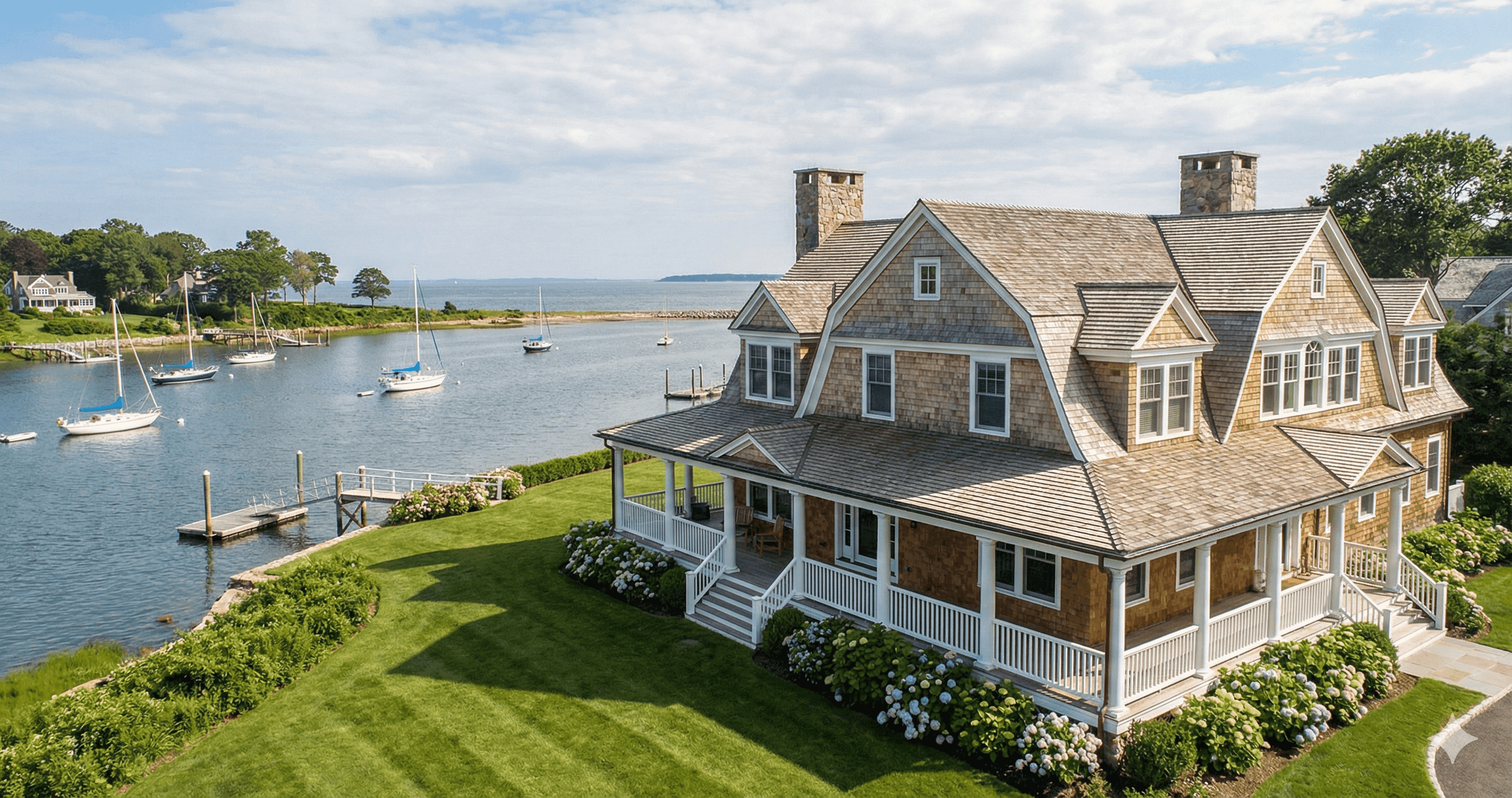
Greenwich vs Stamford: Which Town Is Right for Your Family?
Greenwich vs Stamford: two neighboring Connecticut towns with very different price tags. Greenwich wins on schools and low taxes; Stamford wins on affordability and city energy. Here's how to choose.
Quick Comparison
| Factor | Greenwich | Stamford |
|---|---|---|
| Distance to NYC | 28 miles | 33 miles |
| Train Commute | ~41-48 minutes | ~50 minutes (express) |
| Metro-North Stations | 4 stations | 3 stations (major hub) |
| Population | ~63,500 | ~139,000 |
| Median Home Price | ~$2.0–2.2M mixed / $3.95M SF | ~$650K (city-wide) |
| Property Tax Rate | ~0.71% (10.12 mills) | 27.17 mills (District A) |
| Community Feel | Wealthy coastal town | Diverse, urban small city |
| Housing Options | Coastal to estates | Condos to estates |
| High School Ranking | #9 in CT (Niche A+) | #94-#118 in CT |
Location and Commute

Greenwich vs Stamford: both sit on Connecticut's Gold Coast along the New Haven Line, so both put you on a one-seat ride to Manhattan. Greenwich is closer at roughly 28 miles from Grand Central, with express trains making the trip in about 41 to 48 minutes. Stamford is about 33 miles out, with express trains around 50 minutes.
On paper Greenwich has the shorter ride, but Stamford is the heavyweight transit hub. The Stamford Transportation Center is the second-busiest station on all of Metro-North. It carries Amtrak service to Boston and beyond, and it's the junction where the New Canaan and Danbury branches meet the mainline. If you travel for work, or want options beyond just New York, that hub status is a real advantage.
Greenwich spreads four stations across town: the main Greenwich station plus Old Greenwich, Riverside, and Cos Cob. Most homes sit within a quick walk or short drive of a platform. Stamford runs three stations of its own, the main mainline station plus Glenbrook and Springdale on the New Canaan branch, which makes those walkable inland neighborhoods surprisingly transit-friendly.
Both towns connect easily to I-95 and the Merritt Parkway (Route 15), so driving is straightforward in either direction. Stamford's downtown is also a job center in its own right, with corporate headquarters, restaurants, and offices you can reach without ever boarding a train. For some buyers, that means a short reverse commute or no commute at all.
Greenwich gives you a slightly shorter, more leisurely ride from a quiet town. Stamford trades a few extra minutes for a genuine transportation hub and a downtown full of jobs. Your choice comes down to what you value more: pure NYC travel time, or flexibility and local opportunity.
Door-to-GCT, not the brochure
Express to Grand Central, typical weekday
These are typical express times to Grand Central. Locals, a drive to the station, and a subway to Hudson Yards or FiDi add 15–40 minutes. Ride it twice before you bid.
Quiet stations, fewer trains than Stamford.
Second-busiest Metro-North hub. Amtrak too.
Neighborhood Breakdown
Greenwich Neighborhoods
Old Greenwich & Riverside
Coastal, walkable communities with beach access, train stations, and a strong family-friendly atmosphere. Premium waterfront pricing.
Cos Cob
Historic village feel with a train station and local shops. The more affordable entry point into Greenwich.
Belle Haven
Exclusive gated community with waterfront estates, a private beach, and a country club. Ultra-luxury market.
Backcountry
Sprawling estates on wooded acreage in the northern reaches of town. Privacy, land, and grandeur.
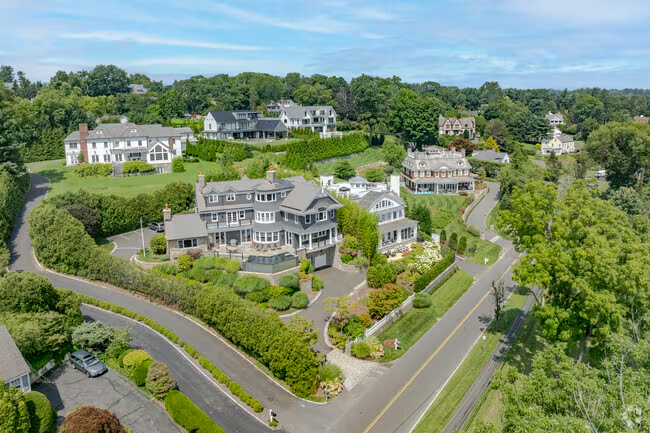
Stamford Neighborhoods
North Stamford
Wooded, leafy, and the priciest part of the city, with large lots and estate-style homes averaging around $1.3M. The most suburban feel in Stamford.
Shippan Point
A waterfront peninsula with coastal charm, beach access, and a tight-knit residential feel. Some of Stamford's most desirable shoreline.
Downtown
High-rises, dining, and nightlife with a genuinely urban feel. Condos near $485K put walkable city living within reach.
Glenbrook & Springdale
Walkable, transit-close neighborhoods on the New Canaan branch, popular with commuters who want their own train station and a village vibe.
Community and Character
Greenwich and Stamford share a border but feel like different worlds. Greenwich is a town of about 63,500 people with a refined, established character. Tree-lined streets, beaches, yacht clubs, and a polished downtown define daily life. It's quiet, residential, and unmistakably affluent.
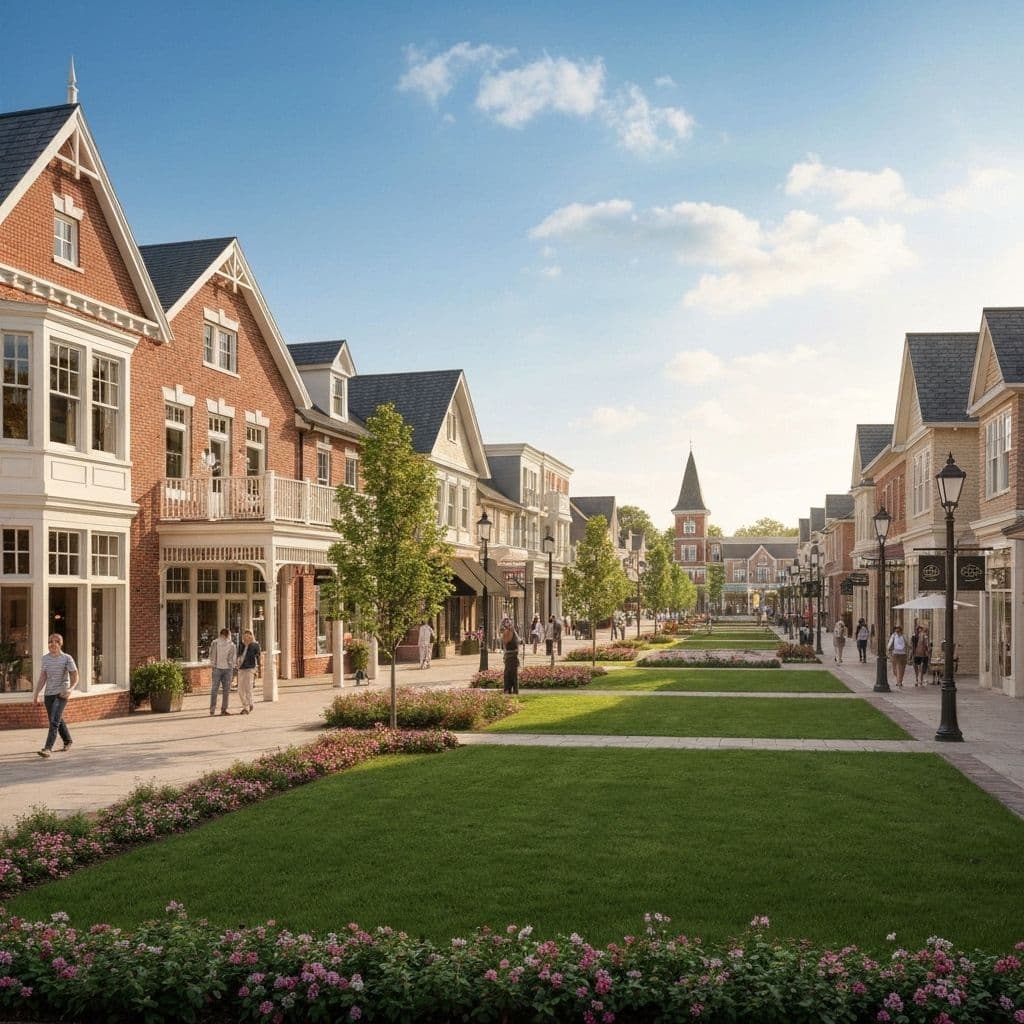
Stamford is a small city of roughly 139,000, more than double Greenwich's population. It's fast-growing, diverse, and genuinely urban in a way no other town on this stretch of coast is. Downtown Stamford has high-rises, a real restaurant and nightlife scene, theaters, and the energy of a place that's still building.
That diversity is part of Stamford's appeal. It draws professionals priced out of the wealthier towns, young people who want walkable nightlife, and families who want city amenities without moving to New York. You can live in a downtown high-rise, a Shippan waterfront cottage, or a wooded North Stamford home, all within the same city limits.
Greenwich, by contrast, attracts buyers who want suburban polish and a slower pace. The town center has upscale shops and dining, but it closes down earlier and feels more residential. Neighborhoods like Old Greenwich and Riverside have that coastal-village intimacy, while the Backcountry offers seclusion.
I've watched buyers fall in love with each for opposite reasons. Greenwich appeals to people who want calm, prestige, and the best public schools in the region. Stamford appeals to people who want energy, walkability, variety, and a price point that actually leaves room to breathe. Neither is wrong; they're just answering different questions.
Housing and Real Estate
This is where the two towns separate most sharply. Greenwich's mixed median still prints around $2.0 to $2.2 million. The August 2026 single-family median was $3.95M. Stamford's city-wide median sits around $650,000. That's not a small gap; it's a different league entirely.
The median trap
A $2M mixed median is not a $2M house
Town-wide medians mix condos, co-ops, and houses. Greenwich's mixed number still prints around $2M, which is why older roundups look even with Rye or Scarsdale. If you are buying a house, use the house number.
Mixed / overall
~$2.0–2.2M
Condos pull this down. August condo/co-op median was $1.16M.
Single-family, Aug 2026
$3.95M
GAR MLS. 17 days on market, 83 listings, 103.6% of list.
Stamford's range is also far wider and more accessible. Downtown condos hover around $485,000, opening the door for first-time buyers and young professionals. North Stamford, the priciest area, averages around $1.3 million, which is still below Greenwich's typical price. In between, you'll find everything from townhouses to single-family colonials.
Greenwich offers variety too, but at a higher floor. Cos Cob is the relative bargain, while Old Greenwich, Riverside, Belle Haven, and the Backcountry climb into seven and eight figures. You're paying for one of the most prestigious addresses in America, exceptional schools, and very low property taxes.
For a buyer with a $700,000 budget, Stamford offers real choices and Greenwich offers almost none. For a buyer who wants a $3 million waterfront estate with a top-ranked school district, Greenwich is the obvious pick. The right town often comes down to which side of that line your budget falls on.
Bottom line: Stamford is dramatically more affordable and varied, which is why so many buyers who admire Greenwich end up purchasing in Stamford. Greenwich commands a premium for prestige, schools, and tax advantages that the numbers below make concrete.
Sources: GAR MLS Greenwich single-family median, August 2026; Stamford city-wide median; CT mill rates 2025-2026.
Education
Schools are one of the clearest dividing lines between these two towns. Greenwich High School serves about 2,620 students, posts a 94% graduation rate, offers 30 Advanced Placement courses, carries a Niche A+ rating, and ranks #9 among Connecticut high schools in US News. It's one of the top public high schools in the state.
Stamford takes a different shape. As a small city, it runs two separate public high schools rather than one. Stamford High serves about 2,121 students with a 77% graduation rate and a US News ranking around #118 in Connecticut. Westhill High serves about 2,259 students with a 76% graduation rate and a ranking around #94 in the state.
Both Stamford high schools rank well below Greenwich and the other affluent Gold Coast towns. They are also more socioeconomically diverse, reflecting the city's broader population. For some families that diversity is a genuine plus; for families laser-focused on test scores and rankings, Greenwich has a clear edge.
Stamford has magnet programs and motivated students who do very well, and plenty of families are happy with their schools. But on the standard ranking metrics that drive many relocation decisions, the gap between Greenwich's #9 and Stamford's #94 to #118 is large and consistent.
If public schools sit at the top of your priority list, Greenwich is the stronger choice on the numbers. If schools matter but affordability and lifestyle matter more, Stamford's options may be perfectly sufficient, and many buyers supplement with private or magnet programs.
Source: Niche.com & US News Rankings, "Best High Schools in CT 2026."
Cost of Living and Property Taxes
Stamford homes cost far less to buy, but they cost more to hold. Greenwich's mill rate is 10.12 for FY2026-27, about 0.71% of market value. On a $2 million Greenwich home, the annual tax bill runs around $14,168.
Like-for-like, not medians
Annual tax on the same $2 million home
Connecticut towns assess at 70% of market, then multiply by the mill rate. New York towns use an effective rate on market value. Same $2M house, different bill.
FY2026-27. Cheapest rate in Connecticut.
Same $2M house. Nearly 3x the Greenwich bill.
Higher mill, cheaper house. Absolute bill can still be lower.
Stamford's general residential rate (District A) is 27.17 mills, more than double Greenwich's. Effective property tax can reach around 2.37% of market value in some districts. Stamford is divided into four geographic tax districts, so your exact rate depends on where in the city you buy; downtown and the more urbanized districts carry the higher rates.
On a $650,000 Stamford home, even at a higher mill rate your absolute tax bill is still typically lower than the tax bill on a $2 million Greenwich estate, simply because the home value is so much lower. But dollar-for-dollar of home value, Stamford taxes you at more than twice Greenwich's rate. A like-for-like comparison favors Greenwich heavily.
Beyond housing and taxes, day-to-day costs are broadly similar. Groceries, dining, and services run at typical Fairfield County levels in both places, and both have strong healthcare access nearby. Stamford's downtown can actually trim some costs, since walkability reduces driving and parking expenses for residents who want a car-light life.
Stamford is far cheaper to enter and Greenwich is far cheaper to tax. If your goal is the lowest purchase price, Stamford wins decisively. If your goal is the lowest tax rate on a high-value property, Greenwich wins by a wide margin. Which one is "cheaper" depends on what you're buying.
Sources: Greenwich BET FY2026-27 mill rate 10.12; City of Stamford (District A mill rate 27.17, FY2025-26).
Let's Chat About Your Move
Tell me a bit about your budget and lifestyle, and I'll send you a curated list of homes in the town that fits you best.
Who Each Town is Best For
Choose Greenwich if:
- Top-ranked public schools are a top priority (#9 in CT, Niche A+)
- You want the lowest property tax rate (10.12 mills, ~0.71% of market)
- Your budget supports a $2M+ home and you want prestige
- You prefer a quiet, polished, residential coastal town
- You want a slightly shorter NYC commute and four station options
- Coastal estates, beaches, and Backcountry seclusion appeal to you
Choose Stamford if:
- Affordability matters most (median ~$650K vs Greenwich's ~$2M+)
- You want walkable downtown living, dining, and nightlife
- You're a first-time buyer or young professional entering the market
- You value a major transit hub with Amtrak and branch-line junctions
- You want a diverse, fast-growing city with real urban amenities
- You want a wide range of options, from downtown condos to wooded estates
Priority Scoring Worksheet
Rate each factor from 1-5 for importance, then see which town scores higher for your priorities.
How to use: Rate each factor 1-5 based on importance to you. Then compare which town better matches your priorities. For example, if affordability is a 5 and school rankings are a 2, Stamford might score higher for you.
Get personalized recommendationsNot sure which town fits your budget and lifestyle?
I've helped families weigh Greenwich's schools and low taxes against Stamford's affordability and city energy. Let's talk through your priorities and find the town that fits what matters most to you.
Book Your Free ConsultationFrequently Asked Questions
Is Greenwich or Stamford more affordable?
Stamford is far more affordable. The city-wide median sits around $650,000, with downtown condos near $485,000. Greenwich's mixed median still prints around $2.0 to $2.2 million, and the August 2026 single-family median was $3.95M. Even Stamford's priciest area, North Stamford, averages around $1.3 million, well below Greenwich. Stamford gives buyers far more entry points across a wide price range.
Which town has lower property taxes - Greenwich or Stamford?
Greenwich has dramatically lower property taxes. Greenwich's mill rate is 10.12 for FY2026-27, while Stamford's general residential rate (District A) is 27.17, more than double Greenwich's. Effective tax can reach around 2.37% in some Stamford districts versus roughly 0.71% of market value in Greenwich. Stamford also has four geographic tax districts, so your rate varies by location within the city.
How do Greenwich and Stamford schools compare?
Greenwich High School ranks far higher. It serves about 2,620 students with a 94% graduation rate, 30 AP courses, a Niche A+ rating, and a US News ranking of #9 in Connecticut. Stamford has two public high schools - Stamford High (about 2,121 students, 77% grad rate, roughly #118 in CT) and Westhill High (about 2,259 students, 76% grad rate, roughly #94 in CT). Stamford's schools are more socioeconomically diverse but rank well below Greenwich.
Which town has a better commute to NYC?
Greenwich is slightly closer at about 28 miles to Grand Central with express trains in roughly 41 to 48 minutes across four stations. Stamford is about 33 miles out with express trains around 50 minutes, but it is a major transit hub - the second-busiest station on Metro-North, with Amtrak service and the junction for the New Canaan and Danbury branches. Stamford has three stations including Glenbrook and Springdale on the New Canaan branch.
What is the lifestyle difference between Greenwich and Stamford?
Greenwich is a wealthy coastal town of about 63,500 with leafy neighborhoods, beaches, and a refined village feel. Stamford is a fast-growing small city of about 139,000 with a genuine urban downtown - high-rises, restaurants, nightlife, and a major rail hub - alongside quiet wooded areas like North Stamford. Choose Greenwich for suburban polish, Stamford for city energy and walkable downtown living.
What are the best neighborhoods in Stamford?
Signature Stamford areas include North Stamford (wooded, large lots, the priciest part of the city), Shippan Point (a waterfront peninsula), Downtown (high-rises, dining, and nightlife with an urban feel), and Glenbrook and Springdale (walkable, transit-close neighborhoods near the New Canaan branch stations). The range is wide, from urban condos to estate-style homes.
What are the best neighborhoods in Greenwich?
Top Greenwich neighborhoods include Old Greenwich and Riverside (coastal, walkable, train access), Cos Cob (a more affordable entry point), Belle Haven (gated waterfront luxury), and the Backcountry (large estates on wooded acreage). Each offers a distinct character within one of the wealthiest towns in America.
Who should choose Stamford over Greenwich?
Stamford is a strong choice for first-time buyers, young professionals, and anyone who wants walkable downtown living, real city amenities, and a major rail hub at a fraction of Greenwich prices. With a median near $650,000 and downtown condos under $500,000, Stamford opens the door for buyers priced out of Greenwich, even though its mill rate is higher and its public schools rank lower.
Last updated: June 2026. Market data from local MLS sources, the Town of Greenwich Assessor's Office, and the City of Stamford.
Related Guides
Greenwich vs Darien
Compare Greenwich with another top coastal Fairfield County town.
Greenwich vs Westport
See how Greenwich compares to Westport's beaches and arts scene.
Best Suburbs Near NYC
Compare all top suburbs including Greenwich, Stamford, Darien, and more.
Moving to Greenwich
A complete relocation guide to settling into Greenwich CT.
Cost of Living in Greenwich CT
Full breakdown of property taxes, housing, childcare, and daily expenses.
Greenwich Neighborhoods
Explore Old Greenwich, Riverside, Cos Cob, Belle Haven and more.